
Introduction
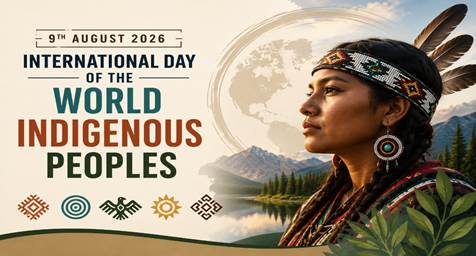
Every year on 9 August, the international community observes the International Day of the World’s Indigenous Peoples, a United Nations observance dedicated to recognizing the contributions, cultures, rights, and knowledge of Indigenous communities around the world.
Indigenous Peoples have safeguarded languages, traditions, and ecological knowledge for generations. Their experience in environmental stewardship, sustainable resource management, and community resilience offers valuable insights for addressing many of today’s global challenges, including climate change, biodiversity loss, social inequality, and sustainable development.
As societies become increasingly interconnected, academic research plays an essential role in documenting Indigenous knowledge, preserving cultural heritage, and supporting evidence-based policies that respect the rights and aspirations of Indigenous communities.
At a time when Artificial Intelligence is reshaping knowledge creation, communication, and decision-making, safeguarding Indigenous knowledge systems and ensuring Indigenous data sovereignty have become more important than ever.
Who Are Indigenous Peoples?
Indigenous Peoples represent extraordinary cultural, linguistic, and social diversity across the globe. Living in more than 90 countries, they maintain unique traditions, governance systems, and relationships with their ancestral lands that have evolved over centuries.
Despite their rich cultural heritage and significant contributions to environmental conservation, many Indigenous communities continue to face challenges related to land rights, education, healthcare, economic opportunities, and cultural preservation.
Supporting Indigenous voices means recognizing both their rights and their vital role in shaping a more sustainable future.
Today, researchers increasingly recognize the value of integrating traditional knowledge with scientific research to strengthen climate adaptation, ecosystem conservation, disaster preparedness, and sustainable development. Collaborative research that respects Indigenous perspectives can help generate innovative solutions while preserving cultural identity and local knowledge.
Why Indigenous Knowledge Matters
Indigenous knowledge systems offer valuable insights into sustainable living, biodiversity conservation, climate adaptation, and natural resource management. Developed through generations of observation and experience, these knowledge systems complement scientific research and provide practical approaches to addressing contemporary environmental and social challenges. Recognizing and respecting Indigenous knowledge strengthens both academic research and evidence-based policymaking while promoting inclusive and sustainable development.
Preserving Indigenous Languages in the AI Era
Language is more than communication; it is a unique cognitive framework. When a language is lost, an entire library of ecological, medical, and philosophical insight vanishes.
Did You Know?
- The Crisis: Of the world’s roughly 7,000 languages, more than 50% are projected to disappear by the end of this century.
- The Algorithmic Gap: Modern Large Language Models (LLMs) training data relies heavily on dominant global languages, rendering the vast majority of Indigenous languages digitally “invisible” or structurally “low-resource.”
The Double-Edged Sword of Technology
Artificial Intelligence offers historic opportunities and profound threats to linguistic heritage. On one hand, researchers are using Natural Language Processing (NLP) to build machine learning tools that analyze audio archives of oral histories, accelerating the creation of digital dictionaries and interactive education materials for youth.
On the other hand, commercial AI models routinely scrape cultural texts and oral histories without community consent. This creates a critical need for Indigenous Data Sovereignty (IDS). IDS asserts that Indigenous communities must retain complete intellectual property rights and final editorial control over how their digitized linguistic and cultural assets are gathered, stored, and commercialized.
Human Rights and Indigenous Communities in the Tech Era
The ongoing struggle for land rights and self-determination has found a new battleground in digital spaces. Historically, land dispossession driven by extractive industries has directly caused systemic vulnerabilities in health, wealth, and education.
The UN Declaration on the Rights of Indigenous Peoples (UNDRIP) mandates the principle of Free, Prior, and Informed Consent (FPIC). In the modern era, FPIC must expand beyond physical resource extraction to include digital extraction. Corporations and research entities must obtain explicit, transparent consent before cataloging traditional medicinal secrets, geographical data, or community intellectual property into commercial algorithmic systems.
Emerging Research Priorities
Driven by digital transformations, the field of Indigenous Studies has shifted into an active, community-empowered critique of modern tech infrastructure and resolving digital marginalization requires an intentional blend of academic silos. No single discipline can fix algorithmic exclusion. Therefore, The Journal of Advances in Humanities Research (JADHUR) acts as an open-access catalyst for this exact cross-disciplinary dialogue, connecting the tools of the humanities with the pressing realities of the advanced tech era.
Call for Papers – Journal of Advances in Humanities Research (JADHUR)
In recognition of the International Day of the World’s Indigenous Peoples, the Journal of Advances in Humanities Research (JADHUR) invites scholars, researchers, practitioners, and policymakers to submit original manuscripts that advance understanding of Indigenous communities and their contributions to contemporary society. We welcome submissions in areas including but not limited to, Indigenous Studies and Governance, Anthropology, Human Rights, Sociology, Environmental Law, Cultural Heritage, Sustainable Community Development
Supporting the UN Sustainable Development Goals
This thematic Call for Papers contributes to:
• SDG 4 – Quality Education
• SDG 10 – Reduced Inequalities
• SDG 13 – Climate Action
• SDG 15 – Life on Land
• SDG 16 – Peace, Justice and Strong Institutions
• SDG 17 – Partnerships for the Goals
JADHUR welcomes original research articles, review papers, theoretical studies, policy analyses, and interdisciplinary scholarship that contributes to inclusive, evidence-based solutions for global challenges.
Submission Link: https://www.jadhur.com/index.php/journal/about/submissions
UFP Insight
The International Day of the World’s Indigenous Peoples reminds us that cultural diversity, traditional knowledge, and respect for human rights are essential foundations for sustainable development.
Meaningful research begins with listening to diverse voices and embracing multiple ways of knowing. As the global research community commemorates the International Day of the World’s Indigenous Peoples, United Frontiers Publisher (UFP) reaffirms its commitment to advancing ethical, inclusive, and interdisciplinary scholarship. Through the Journal of Advances in Humanities Research (JADHUR), we welcome research that preserves cultural heritage, informs policy, and contributes to a more sustainable and equitable future.
References and Further Reading
- United Nations. (2026). International Day of the World’s Indigenous Peoples (9 August). https://www.un.org/en/observances/indigenous-day
- United Nations. United Nations Declaration on the Rights of Indigenous Peoples (UNDRIP). https://www.un.org/development/desa/indigenouspeoples/declaration-on-the-rights-of-indigenous-peoples.html
- UNESCO. Indigenous Peoples. https://www.unesco.org/en/indigenous-peoples
- International Labour Organization (ILO). Indigenous and Tribal Peoples. https://www.ilo.org/indigenous
- Convention on Biological Diversity (CBD). Traditional Knowledge and Biodiversity. https://www.cbd.int/traditional
- United Nations Permanent Forum on Indigenous Issues (UNPFII). https://social.desa.un.org/issues/indigenous-peoples/unpfii
Publisher’s Note: This content is published by United Frontiers Publisher (UFP) to support academic dialogue and public awareness of internationally recognized observances. References to United Nations initiatives and Sustainable Development Goals (SDGs) are intended solely for educational purposes and do not imply official endorsement or affiliation.